Selection tests will more than strength. Four weeks of assessment, then roughly six months of Operator Training.
In reported classes of 120 candidates, only twelve to sixteen passed selection.
Phase 1
Eligibility
RankEnlisted E-4 to E-8, or officers O-3 and O-4
Age22 or older
AptitudeASVAB GT score of 110 or higher
ServiceAt least 2½ years remaining; airborne qualified or willing to train
RecordEligible for a Secret clearance; no court-martial or Article 15 history
SourceRoughly 70% come through the Ranger track (Gen. Wayne Downing, 2006)
Phase 2
Selection
WhereCamp Dawson, West Virginia. Twice a year, four weeks each
BaselinePush-ups, sit-ups, a 2-mile run and a 110-yard clothed swim
NavigationNight land navigation, 18 miles with a 40-lb ruck. Load and distance rise as time shrinks
Long Walk40 miles with a 45-lb ruck over rough terrain, against an unknown time limit
MindPsychological exams, then a board of instructors, psychologists and the commander
Phase 3
Operator Training Course
ShootingClose-range accuracy, then moving targets, then live shoot-house room clearing
BreachingEntry methods, then close-quarters battle with “hostages” in the room
CombinedHostage and counterterrorism drills in buildings and aircraft, assault and sniper elements together
TradecraftSurveillance, counter-surveillance and covert signals
ProtectionAdvanced driving and VIP and diplomatic protection
FinaleA culmination exercise that demands every skill at once
PartnersCross-training with Australia’s SASR, Britain’s SAS and Canada’s JTF 2
Skills, applied
What the training looks like in the field.
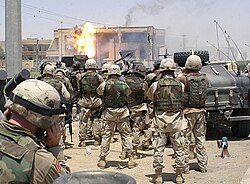
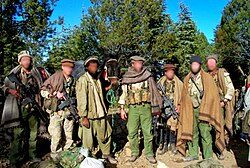
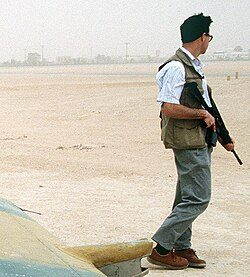
Selection and training imagery is rarely public. These frames show the same skills used on operations.
Breaching and close-quarters battle. Mosul, July 2003: operators alongside 101st Airborne soldiers.Tradecraft and blending in. Afghanistan, November 2001: operators in local dress.Protection. Gulf War, 1991: a bodyguard in civilian clothes near General Schwarzkopf.